
Business Storage in Dubai: A guide for SMEs, startups and online businesses
How temporary stock decisions become long-term business problems
Every small business has probably said it at some point. A new shipment arrives, there are a few extra cartons, or some products haven’t sold as quickly as expected. Someone suggests, “We’ll keep it here for now,” and the boxes are pushed into a spare corner.
At first, it’s just a few cartons. Then another delivery arrives, followed by packaging supplies, seasonal stock and products waiting to be dispatched. Before long, that temporary corner has become an unofficial stockroom. For small businesses, especially those managing inventory alongside everyday operations, this can happen surprisingly quickly. And while keeping everything close by might seem convenient, it can come with costs that aren’t immediately obvious.
When a few boxes become a stockroom
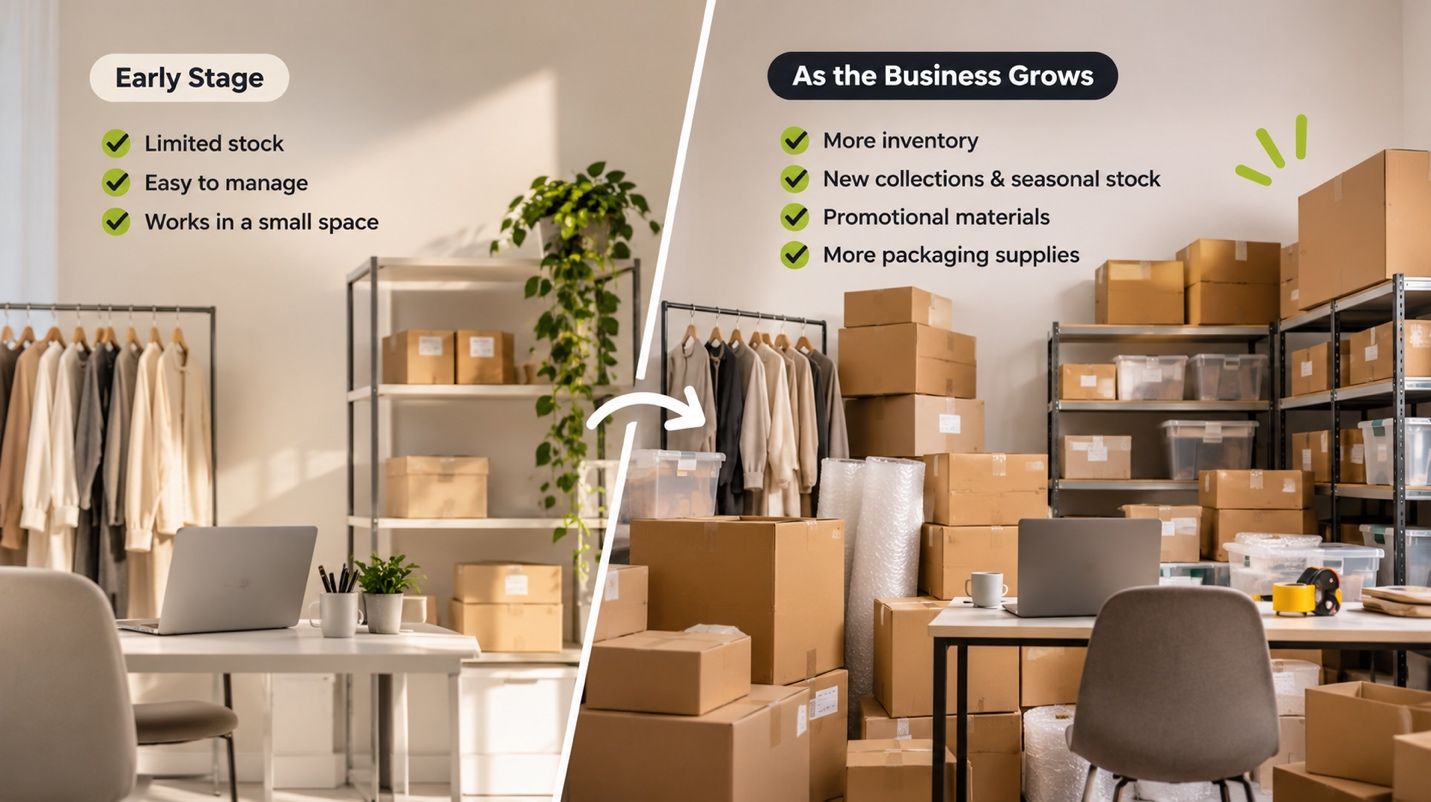
For many startups and small businesses, having a dedicated warehouse isn’t always practical or necessary. An online clothing store might begin with a few shelves of inventory. A beauty business could keep its products and packaging materials in a spare room. A small retailer might store additional merchandise behind the counter.
These arrangements often work perfectly well in the beginning. But as orders increase and product ranges expand, so does the amount of stock that needs to be managed. New collections arrive before older ones sell out. Promotional campaigns require extra inventory. Packaging materials take up more room than expected. The problem isn’t necessarily that the business has too much stock. It’s that the space originally intended for a small operation hasn’t grown alongside it.
The real cost of keeping stock wherever it fits
When businesses think about inventory costs, they usually consider the price of purchasing products, shipping charges and potential losses from unsold goods. But there’s another cost that’s easy to overlook: the space that inventory occupies. For a small business operating from an office, retail store or home workspace, every additional carton takes away a little more usable room.
A stockpile of products might eventually occupy space intended for packing orders, preparing deliveries or serving customers. In Dubai, where commercial space can represent a significant business expense, using valuable working areas for excess inventory may not always be the most efficient choice. Keeping stock nearby is convenient, but only when it doesn’t interfere with the work that needs to happen around it.
More stock doesn’t always mean better organisation
Having products readily available is important, particularly for businesses that handle frequent orders. But having everything in one place doesn’t automatically make inventory easier to manage.
When cartons are stacked wherever there’s room, finding a particular product can become unnecessarily time-consuming. An employee might need to move several boxes to reach a specific item. Products from different collections may get mixed together. Packaging supplies might be scattered across multiple shelves.
For businesses handling several product variations, such as different clothing sizes, colours or product categories, this can quickly become frustrating. Poor stock organisation can also make it harder to identify what’s running low, what’s been sitting unsold and what needs to be reordered.The more time a business spends searching for products, the less time it has for fulfilling orders and serving customers.
The problem with buying stock in bulk
Buying inventory in larger quantities can sometimes help small businesses secure better supplier prices or prepare for busy sales periods. But bulk purchasing also means finding somewhere to keep everything.
An e-commerce business preparing for a major sale might order additional products weeks in advance. A gift shop may receive its festive collection well before the season begins. A promotional merchandise supplier could have hundreds of items waiting for upcoming client orders.
While purchasing ahead may make commercial sense, it can create a temporary space problem. This is where businesses need to consider not only how much stock they can afford to purchase, but also how much they can comfortably accommodate. A good supplier deal becomes less attractive if the resulting inventory disrupts everyday operations.
When stock starts affecting the customer experience
Inventory management isn’t just an internal concern. It can influence how efficiently a business serves its customers. For an online business, a disorganised stock area may slow down picking, packing and dispatching orders. For a retail store, excess cartons can occupy areas that would otherwise be used for product displays or customer movement.
Even small delays can become frustrating during busy periods, particularly when several orders need to be prepared at once. A workspace that allows staff to locate products easily, pack orders comfortably and move around without obstacles can make everyday operations much smoother.
Keeping what you need, without keeping everything around you
Not all inventory needs to be within arm’s reach every day. Fast-moving products, regularly used packaging materials and items needed for immediate orders should be easily accessible.
But seasonal collections, reserve inventory, bulk purchases and promotional materials may not need to occupy the same working space. Separating everyday stock from items needed less frequently can help businesses make better use of their available space.
For growing businesses that aren’t ready to invest in a larger warehouse, flexible storage can be one way to manage additional inventory without committing to more permanent commercial space.
At The Box Self Storage, businesses can explore storage options for excess stock, packaging supplies, promotional materials and other business essentials, while keeping their primary workspace focused on daily operations.
Make space for your business to grow
As your business grows, your storage needs are likely to change too. What starts as a few cartons can quickly become shelves of inventory, packaging supplies and seasonal stock. But managing it all doesn't have to mean moving into a bigger office or committing to an entire warehouse.
At The Box Self Storage, businesses can choose from a range of storage unit sizes to suit their needs, whether it's a few boxes of products or larger quantities of inventory and equipment. With flexible rental terms, 24/7 access and climate-controlled units, businesses can conveniently store their stock and access it whenever needed.
As inventory levels change, businesses also have the flexibility to upsize or downsize their storage space, making it easier to accommodate new deliveries, seasonal demand or business expansion without committing to more space than necessary.
Because at the end of the day, your business needs room to grow, not just more room for boxes.

